More Than Representation: How Emma Ollie Pushed Inclusivity From Buzzword to Baseline
There's a version of the inclusivity conversation that lives entirely in press releases and diversity reports. And then there's the version Emma Ollie has been living out loud, in real time, through every piece of content she's put into the world. The difference? One is performative. The other actually changes things.
For fans who've been following Emma from early on, her commitment to showing up for all kinds of people has never felt like a strategy. It's just who she is. But when you zoom out and look at the broader entertainment landscape over the past few years, the trail she's blazed becomes impossible to ignore.
When Visibility Became Non-Negotiable
Before Emma Ollie made it feel obvious, mainstream digital content had a pretty narrow definition of who got to be centered. The default was predictable — and audiences were starting to notice the gap between what they actually looked like and what they saw reflected back at them on screen.
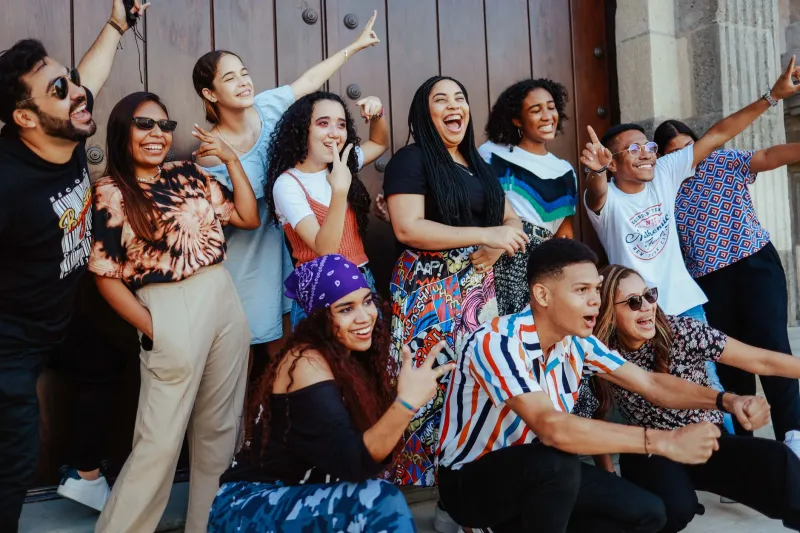
Emma stepped into that gap without making a big announcement about it. She just started including people. Different body types, different backgrounds, different abilities, different ways of moving through the world. And she didn't frame any of it as a lesson or a statement. It was texture. It was life. It was what her content actually looked like because it reflected the actual world she was living in.
That naturalness turned out to be radical. Because when you don't treat inclusion as a special episode or a brand moment, you signal something much bigger: that this is just the standard. And standards, once shifted, are hard to roll back.
The Accessibility Moves Most People Missed
One of the less-discussed but genuinely impactful parts of Emma Ollie's approach has been her attention to accessibility — the behind-the-scenes choices that make content usable and enjoyable for people who are often left out of the conversation entirely.
Captioning, audio descriptions, thoughtful pacing, platform choices that don't require high-end hardware — these aren't glamorous. They don't get a lot of engagement. But they matter enormously to the audiences they serve. And Emma's consistency in prioritizing them sent a message to her peers and to the platforms themselves: this isn't optional. This is care in action.
Other creators took notice. Not all of them, not all at once — but the shift is measurable. Accessibility features that used to feel like afterthoughts are increasingly being treated as baseline requirements, partly because audiences have been trained by creators like Emma to expect them.
Challenging the Industry From the Outside In
Here's what makes Emma Ollie's influence particularly interesting: she didn't get a seat at the table and then advocate for change. She built her own table, filled it with the kind of content the industry wasn't making, and then watched the industry scramble to catch up.
There have been specific moments — collaborations, campaign choices, public conversations she's entered — where her presence visibly shifted what was being discussed. Brand partnerships that might have gone the safe, predictable route suddenly had to reckon with the fact that Emma's audience expected more. Casting conversations that used to happen behind closed doors started feeling the pressure of a public that had been shown, repeatedly, that different was not just acceptable but preferable.
She didn't lobby for these changes. She demonstrated them. And that's a fundamentally different kind of power.
What the Ripple Effect Actually Looks Like
It's easy to talk about influence in abstract terms. It's harder to point to the concrete. But if you've been paying attention to the creator economy over the past couple of years, you can see the Emma Ollie effect playing out in some pretty tangible ways.
Smaller creators who cite her as an inspiration consistently talk about her approach to casting and community-building as a model they've actively tried to replicate. Mid-size brands that used to play it safe with their influencer rosters have diversified in ways that track pretty directly to shifting audience expectations — expectations that creators like Emma helped shape.
And at the platform level, features and policies that touch on accessibility and representation have evolved in ways that reflect growing pressure from creators and audiences who've been shown that better is possible.
None of this is a straight line from Emma Ollie to a policy change. Influence doesn't work that cleanly. But the connective tissue is there if you're willing to trace it.
Why It Stuck When Other Attempts Didn't
Plenty of creators have tried to position themselves as champions of inclusivity and ended up looking like they were checking boxes. So what made Emma's approach land differently?
A big part of it is consistency. Emma didn't do an inclusivity push for Black History Month and then go back to business as usual. She didn't feature a disabled creator once and call it representation. The commitment has been steady, woven into the fabric of what she makes rather than bolted on as a feature.
The other piece is that she's never treated the people she includes as props for her own image. The communities she represents can feel the difference between being used and being genuinely seen. And Emma Ollie's audience — diverse, vocal, fiercely loyal — is proof that people respond to the real thing.
The Bigger Picture
What Emma Ollie has done for inclusivity in entertainment isn't just impressive on its own terms. It's a blueprint. It shows what's possible when a creator decides that their platform is for everyone, not just the audience that's easiest to reach.
Mainstream media is slow. It moves toward change reluctantly, usually when the financial case is undeniable. Emma helped make that case — not by arguing for it, but by showing, with receipts, that audiences want more than they've been given.
That's the Emma Ollie effect. And honestly? We're still in the early chapters of what it's going to mean.